
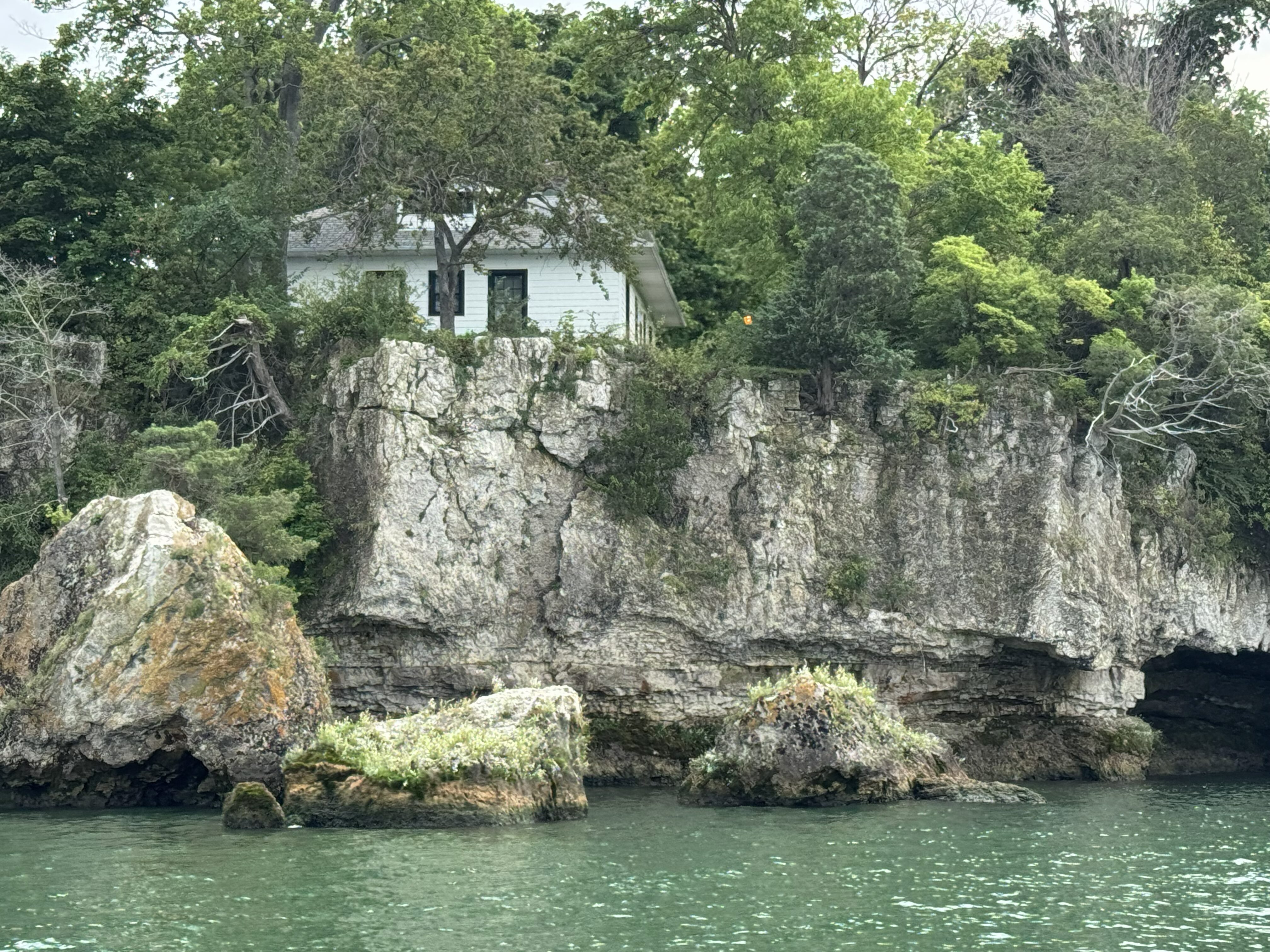
Over 750,000 tourists head to South Bass Island (village of Put-In-Bay) every season. Tourists zoom over Lake Erie from Ohio’s mainland on the popular Jet Express ferry, topping speeds of 40 miles-per-hour. Most barely take notice of Gibraltar Island, yet it’s only a few hundred yards offshore from South Bass.
The unassuming Gibraltar Island is visible from South Bass. It’s quiet in contrast to its buzzy, South Bass Island neighbor that explodes with a colorful frenzy of island restaurants, hotels, bars and souvenir shops. The public can access Gibraltar Island from South Bass via a water taxi ride — under five minutes one way — seasonally, on Thursdays only.
Gibraltar Island is a rare find, it’s the oldest freshwater biological field station and research laboratory in the United States. The Ohio State University (OSU) acquired the 6.5 acre island in 1925. Julius Stone, a well-known conservationist and member of Ohio State’s Board of Trustees, donated Gibraltar Island to serve as the university’s island campus for Lake Erie and Great Lakes research.
Throughout history, Gibraltar Island served many fascinating purposes. In the War of 1812, Commodore Oliver Hazard Perry used the island as a lookout point to watch for the British fleet. Then, in the 1860s, Lincoln’s Civil War Financier Jay Cooke purchased the island and built Cook Castle. Cooke’s Gothic-style building was used as a summer residence, and still stands today.
“We are one of the only universities to have an entity like this,” said Sue Bixler, who
provides education and outreach for OSU Stone Laboratory and Ohio Sea Grant. “Not a lot of universities have their own island and a building on the National Registry of Historic Landmarks.”
Stepping around the island is a treasure trove of history, science and nature. Crickets create a symphony under a canopy of Lake Erie’s island forest. Winding paths lead to the island’s 1929 Dining Hall, then past the 1930 Stone Cottage which houses instructors, visiting scientists and laboratory guests. The Harborview House serves as a dormitory for the students.
The centerpiece of the island is the Franz Theodore Stone Laboratory, a three-story building constructed of local limestone with classrooms, research labs and offices. Since the lab’s completion in 1929, OSU’s island campus has made valuable contributions that shape the health of our Great Lakes. It’s also the epicenter for breaking developments on Lake Erie and the Great Lakes.
“When Toledo lost their water because of the big snafu with the intake crib at the mouth of the Maumee River, we were the hot spot for figuring out what was going on, to help people understand,” said Bixler.
Small island, mighty contributions
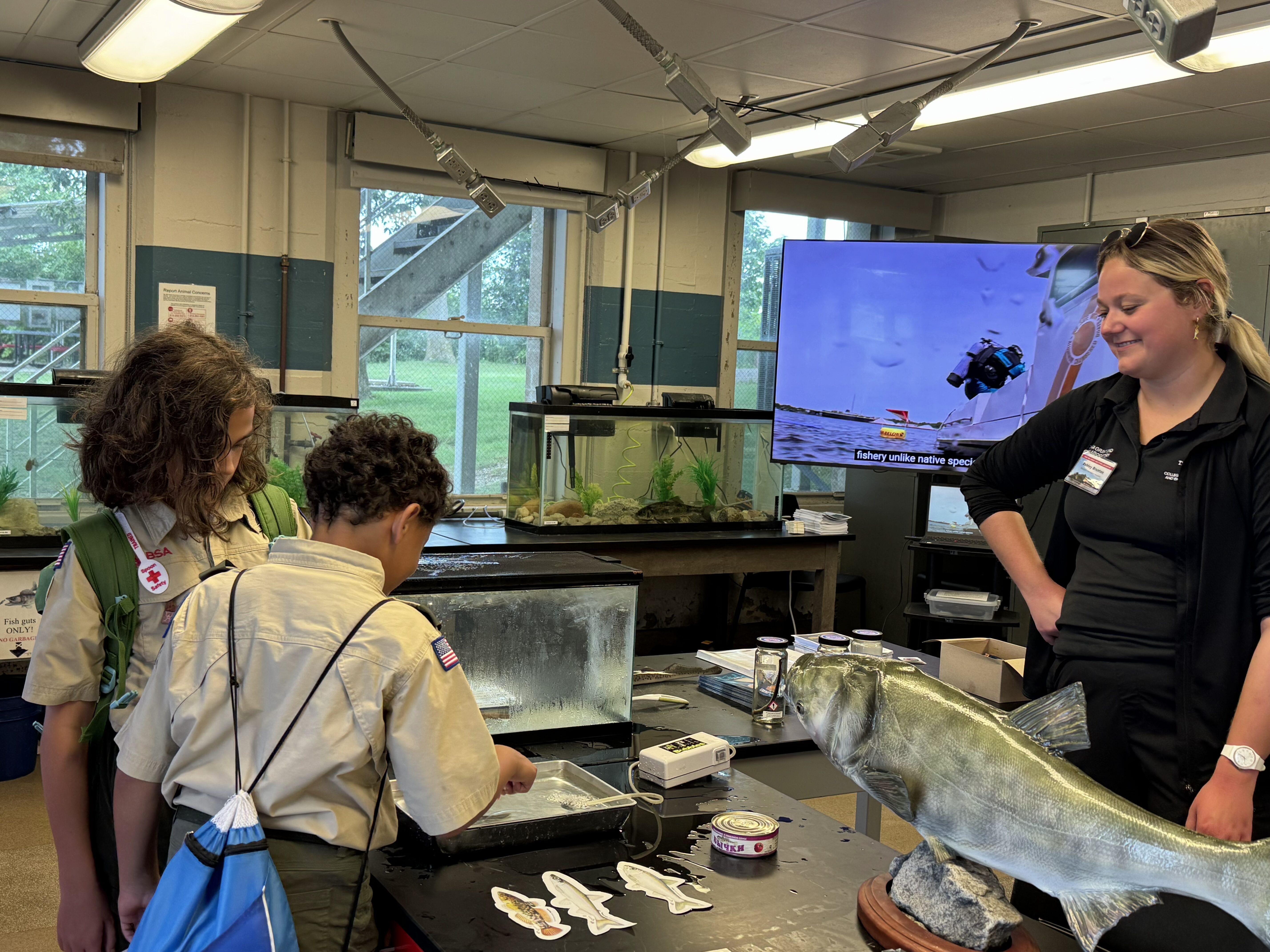
For an island that’s only 6.5 acres, it draws top scientists and makes substantial strides in researching water quality.
“Lake Erie has been well studied for cyanobacteria blooms, and we get researchers from all over the country that study Lake Erie blooms here,” said Justin Chaffin, Ph.D. research coordinator for The Ohio State University’s Stone Lab. “What we’re learning in Lake Erie can be applied to other lakes around the world that have very similar issues.”
Chaffin’s latest research involves cyanobacteria blooms and understanding models to predict when and where these toxins will occur.
“That way, water treatment plant operators will have an early warning, or beach managers can have an early warning when toxic bloom is coming, and when it’s leaving,” he said.
What triggers these microcystins? According to Chaffin, much research has gone into understanding why some bacteria blooms produce toxins. Forecasting when they will occur is the next frontier.
“We are working with our colleagues at NOAA (National Ocean and Atmospheric Administration) to develop a microcystin forecast system,” said Chaffin. “We are also working with charter boat captains who go out fishing. They volunteer to collect water samples for us each week. Working with them has been very rewarding.”
The island is a hub of knowledge, researchers come from all over — Canada, Australia and Brazil. In season, the island buzzes with scientific inquiry; university students come to take courses in everything from aquatic biology to zoology. From the lake thaw in spring to the end of October, Gibraltar is a dream summer school and research station for environmental minds.
Year-round research, also on South Bass Island
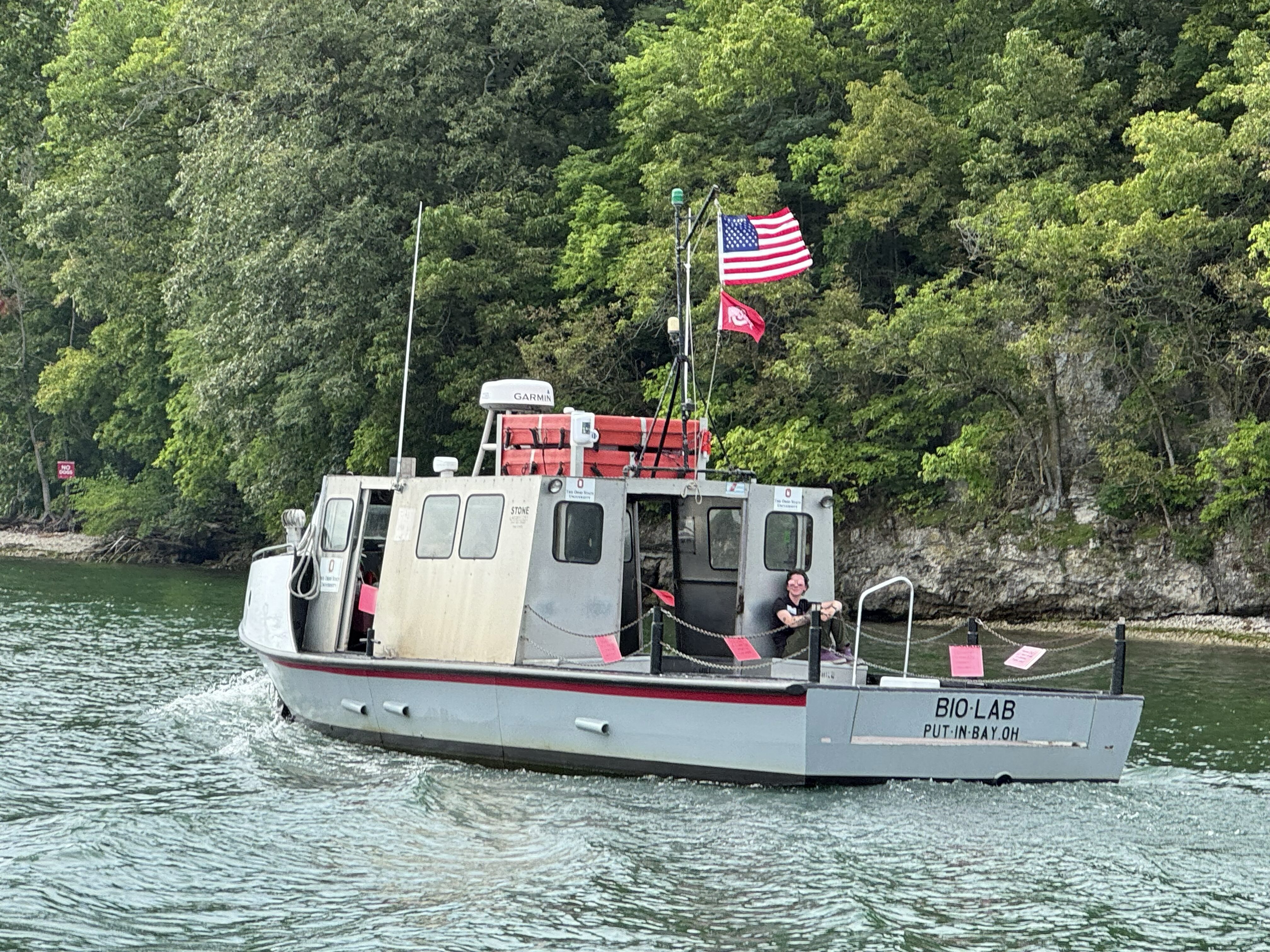
When Gibraltar closes in October, OSU also offers full labs on South Bass Island. Chaffin works on South Bass long after the tourists have left for the season.
“Our number one asset is our location,” said Chaffin. “We’re located right on the water. Our vessels are docked right in front of our labs. An island location is also our biggest challenge though, it involves a lot of logistics.”
A significant portion of research focuses on Harmful Algal Blooms (HABs), a critical issue facing the Western Basin of Lake Erie. South Bass Island’s open-air Mesocosm Facility — the first of its kind on the Great Lakes — allows for broad environmental research. Inside, 15 circular, 600-gallon tanks are used to study algae, bacteria, fish and more.
“The Mesocosm, it looks like a greenhouse,” educator Sue Bixler said. “Lake Erie water is pumped into the tanks and exposed to whatever’s going on outside: precipitation, humidity, temperature, etc. The researcher can alter the water in each of those tanks.”
She continued, “Say, he’s working with nitrogen and phosphorus. He can alter the amounts that he’s putting into those tanks, and then watch under the natural conditions that are happening here at Lake Erie.”
“Phosphorus and nitrogen will trigger larger blooms, and for the most part, we know that the sources of those nutrients to Lake Erie are mainly from agricultural sources,” added Chaffin. “The farming community is doing what they can to try to help keep phosphorus on their fields and out of the water.”
Results from teamwork
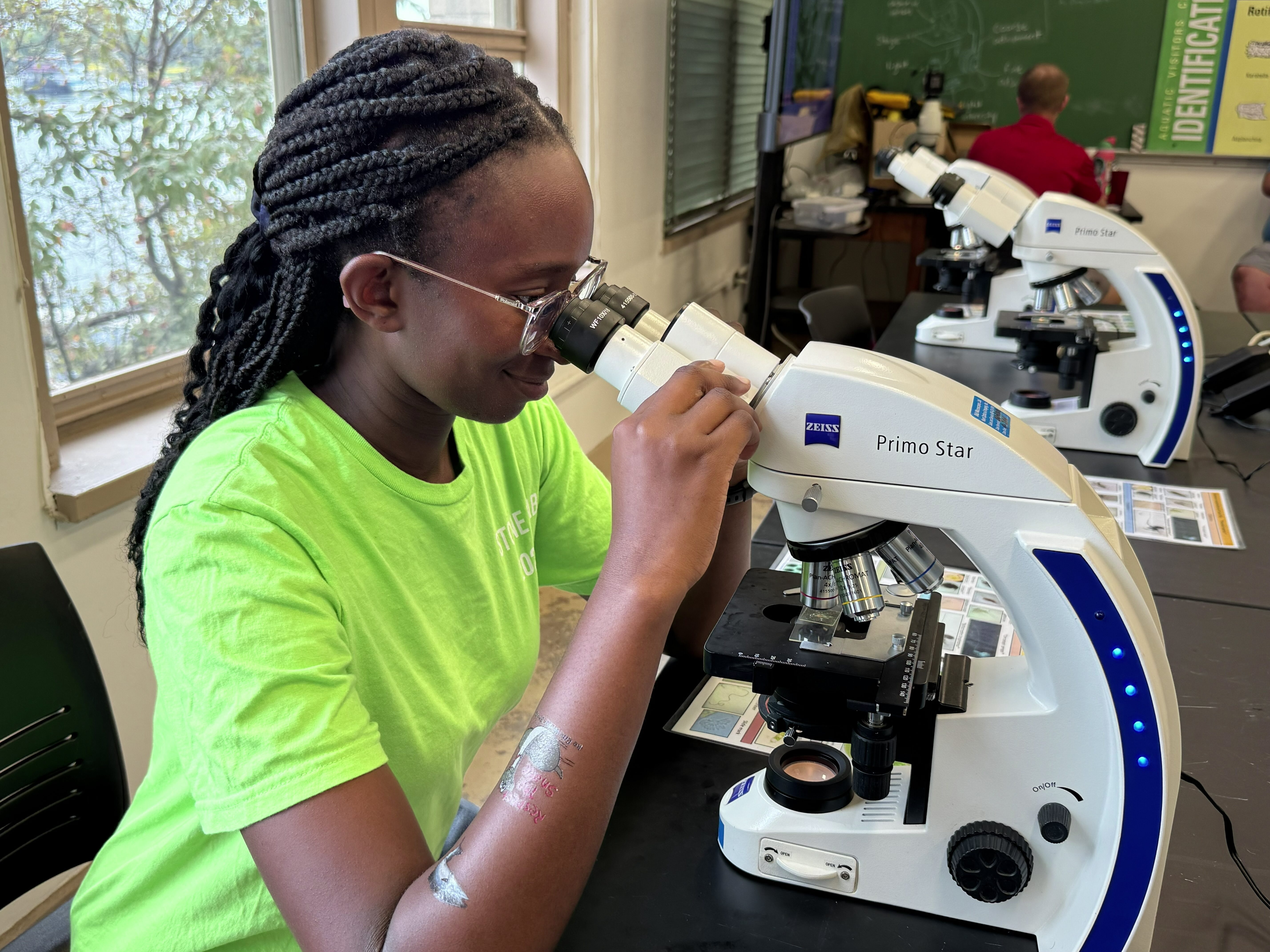
Research is only part of the equation — The Ohio State University’s Stone Lab researchers and the Ohio Sea Grant educators often work in tandem. The Ohio Sea Grant is one of 34 Sea Grant programs throughout the country. The grant allows school-age students, visiting researchers, outreach programs, plus multiple universities to participate in water research.
Researcher Kevin Neves, Ph.D., from Bowling Green University and his team, pose the question: “Can a fish’s hearing determine its chances of survival?” His new research analyzes abnormalities in fish ear structure. Research results could potentially improve the health of fisheries and aquaculture practices.
When research and education come together, it’s like a powerful lake wave splintering against a rock; it makes a dramatic impact on the landscape. Sara Guiher, from the Ohio Sea Grant extension, sees this firsthand. As a harmful algal bloom and water quality specialist for the Ohio Sea Grant Extension, her work targets a diverse audience of students, elected officials, farmers and residential homeowners.
“Agriculture is about between 73% and 80% of the watershed in the Maumee River, and so that is our number one way that we can have an impact on the land side,” Guiher said.
Guiher works with area farmers, they want solutions for growing productive crops and preserving our water quality. Since nutrients are needed to grow crops, Guiher introduces soil testing methods that inform farmers how to use only exactly what they need. She also educates on other agricultural management techniques including wetlands.
“Recently, we’ve seen a definite decrease in the phosphorus that’s coming down the Maumee River, so it’s estimated to be about 10% to 12% decrease,” said Guiher. “Now the goal is 40%, so we have a lot of work to do, but it’s awesome to see some positive directions.”